
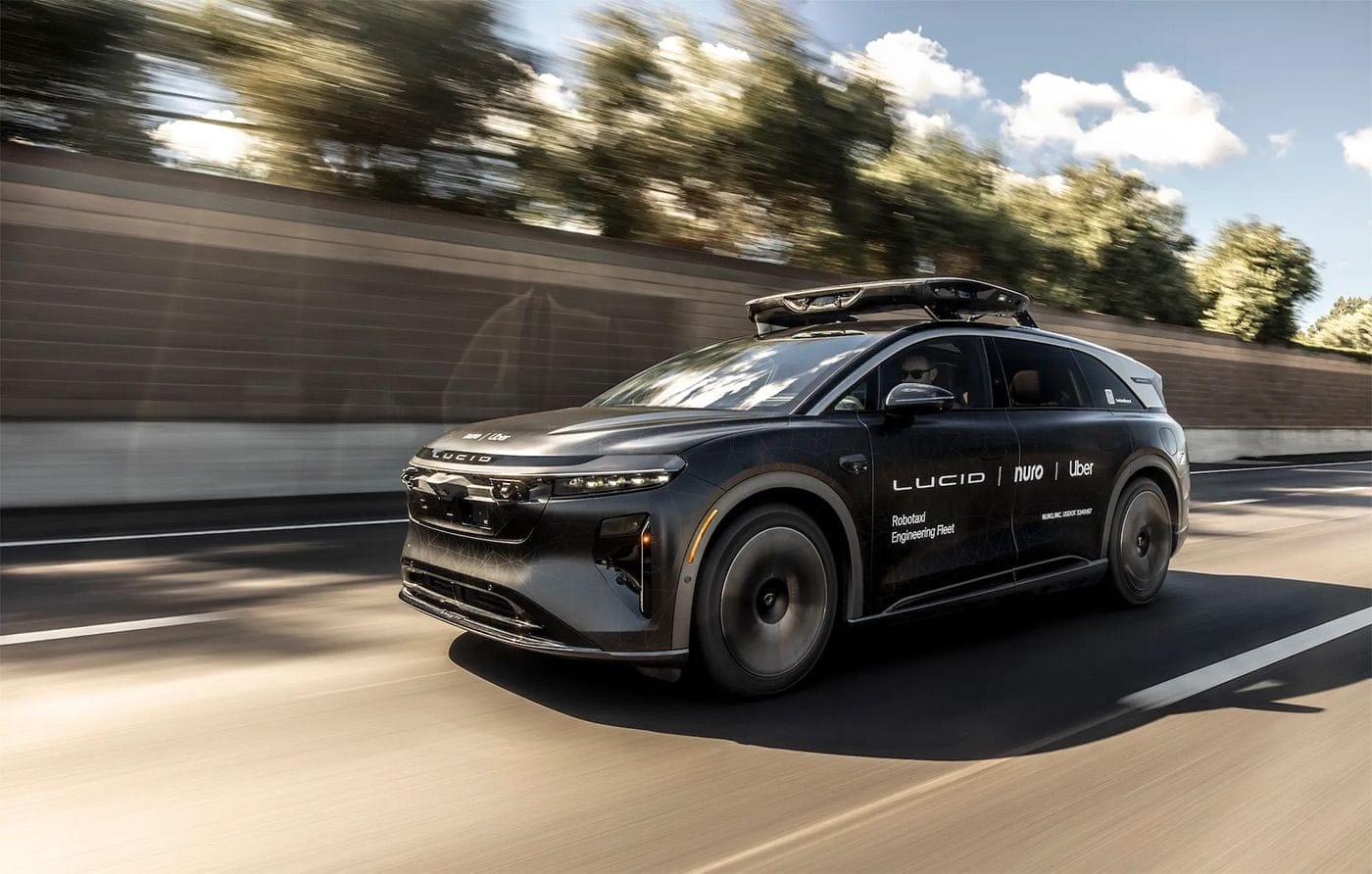
After abandoning its self-driving car program nearly 10 years ago following a fatal crash in Arizona and a high-profile trade secrets lawsuit, Uber is getting back into the robotaxi business, with driverless testing now underway on Bay Area streets.
Uber and its partners Lucid and Nuro announced Tuesday that they have begun testing their Lucid Gravity electric SUVs without human safety drivers on public roads, as Engadget reports. The initial testing area includes Palo Alto, Mountain View, Los Altos, and Sunnyvale, with plans to expand to additional Bay Area cities next year. The vehicles reportedly use a combination of high-resolution cameras, lidar, and radar sensors, along with Nuro's autonomous driving system.
According to Gizmodo, the companies say employees will be among the first passengers to ride in the fully driverless vehicles in the coming months, ahead of a planned public launch in the first quarter of 2027. Riders will eventually be able to summon the robotaxis through the Uber app.
As SFist reported previously, Uber announced its partnership with Lucid and Nuro at TechCrunch Disrupt in San Francisco last year, initially proposing a fleet of at least 20,000 Lucid Gravity SUVs equipped with Nuro's self-driving technology. Uber also committed hundreds of millions of dollars in investments to the two companies.
The partnership expanded in April, when Uber announced another $200 million investment in Lucid, bringing its total investment in the electric vehicle maker to $500 million, as Gizmodo reports. The planned fleet also grew to at least 35,000 vehicles, including future midsize Lucid models. The companies have said they intend to expand the service internationally, with Houston expected to be the next US market after the Bay Area in 2027.
This isn't Uber's first attempt at getting into the self-driving car business. Back in December 2016, former CEO Travis Kalanick rolled out autonomous vehicles on San Francisco streets without first obtaining the necessary permits from the California DMV, prompting the agency to order Uber to take the vehicles off the road about a week later, as SFist reported previously.
Uber continued testing its self-driving Volvos in Tempe, Arizona, where one vehicle flipped over following a collision in March 2017. A year later, another Uber autonomous vehicle struck and killed a woman who was walking her bicycle across the road. The vehicle's safety operator, who was watching a television show on her phone, was later at the center of a lengthy legal case.
Uber also faced a trade-secrets lawsuit from Google over former Waymo executive Anthony Levandowski, who was convicted in 2020 and pardoned by Trump in 2021. Uber later exited the self-driving business, leaving Waymo to take the lead in robotaxis.
Uber is now working its way back into the market through several partnerships, including a deal with electric vehicle maker Rivian announced in March that could eventually put as many as 50,000 robotaxis on its platform, per Gizmodo.
The company is also increasingly competing with some of those same partners. Uber reportedly began offering rides in Amazon-owned Zoox's robotaxis in Las Vegas last week, while Waymo currently makes its vehicles available through Uber in Austin and Atlanta. Waymo, which operates roughly 4,000 vehicles across more than a dozen metro areas, has also confirmed plans to end its Uber app arrangement in those two cities, launching its own ride-hailing app there in January 2028.
Previously: Get Ready for Uber Robotaxis to Start Rolling In SF Next Year


